
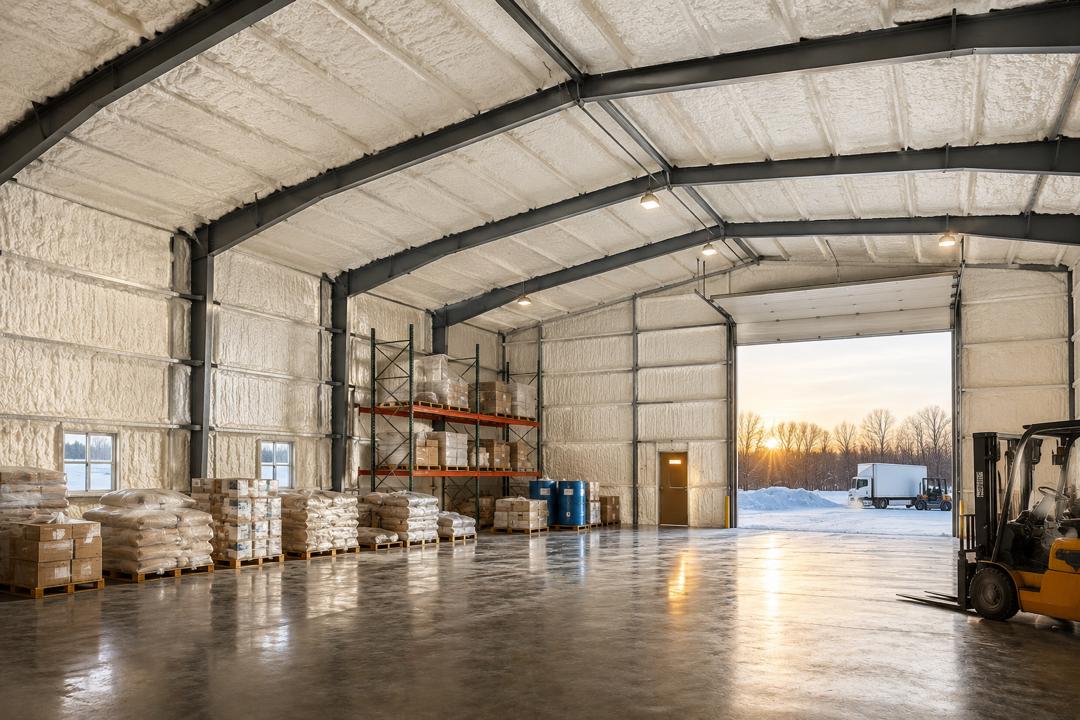
Most business owners focus on things they can see-equipment, inventory, staffing, and day-to-day operations. But one of the biggest expenses affecting a building often stays hidden behind the walls and above the ceiling.
Insulation
When insulation isn’t performing properly, the effects show up everywhere else: higher utility bills, uncomfortable working conditions, moisture issues, and increased wear on heating and cooling systems.
For businesses across Southwest Michigan, improving insulation has become one of the most effective ways to reduce operating costs and improve building performance.
The Signs Your Building May Have an Insulation Problem
Many commercial property owners don’t realize there’s an issue until the symptoms become impossible to ignore.
Common warning signs include:
Heating and cooling bills that continue to increase
Rooms or work areas that are difficult to keep comfortable
Drafts near walls, doors, or rooflines
Condensation on walls or ceilings
Excess humidity inside the building
HVAC systems running constantly
Uneven temperatures throughout the facility
While these issues may seem unrelated, they often point back to air leakage and inadequate insulation.
Why Poor Insulation Costs More Than You Think
The true cost of poor insulation goes far beyond monthly utility bills.
Higher Energy Consumption
When conditioned air escapes through gaps in the building envelope, heating and cooling systems must work harder to maintain desired temperatures.
The result is increased energy usage throughout the year—especially during Southwest Michigan’s cold winters and humid summers.
Moisture and Condensation Issues
Air leaks allow warm, moisture-laden air to move through walls and roof assemblies. When that moisture encounters cooler surfaces, condensation can occur.
Over time, excess moisture may contribute to:
Mold growth
Material deterioration
Rust and corrosion
Damage to stored inventory
Indoor air quality concerns
For warehouses, agricultural buildings, manufacturing facilities, and commercial storage spaces, moisture control is critical.
Increased HVAC Wear and Tear
Heating and cooling equipment is designed to maintain temperatures—not compensate for major air leaks.
Buildings with poor insulation often place unnecessary strain on HVAC systems, leading to increased maintenance costs and potentially shorter equipment life.
Reduced Employee Comfort
Work environments that are too hot in summer or too cold in winter can impact productivity and overall comfort.
Temperature consistency isn’t just about convenience—it helps create a better environment for employees, customers, and tenants.
Why More Businesses Are Choosing Spray Foam Insulation
Traditional insulation products can be effective when installed correctly, but they often leave gaps where air can still move through the building envelope.
Spray foam insulation addresses two important issues at once:
Insulation and Air Sealing in One Application
Unlike many traditional insulation systems, spray foam expands after application, helping seal cracks, gaps, and hard-to-reach areas.
This creates a more complete thermal barrier throughout the building.
Better Moisture Control
Closed-cell spray foam helps reduce unwanted moisture movement and can be particularly valuable in commercial buildings where condensation has been an ongoing concern.
Long-Term Performance
One reason commercial property owners choose spray foam is its durability.
Once installed properly, it doesn’t settle, sag, or shift like some traditional insulation materials can over time.
Suitable for Many Commercial Applications
Spray foam insulation is commonly used in:
Warehouses
Distribution centers
Manufacturing facilities
Commercial offices
Agricultural buildings
Retail spaces
Storage facilities
Metal buildings
Whether the goal is reducing operating costs or improving building comfort, spray foam offers a versatile solution.
What Business Owners Notice After Upgrading
Many property owners report improvements in several areas after upgrading insulation:
More consistent indoor temperatures
Lower heating and cooling costs
Reduced drafts
Improved moisture control
Less strain on HVAC systems
Better comfort for employees and occupants
While every building is different, the combination of insulation and air sealing often produces noticeable results.
Why Installation Quality Matters
Even the best insulation product can underperform if it is installed incorrectly.
Proper surface preparation, application thickness, and attention to detail all play an important role in long-term performance.
That’s why choosing an experienced spray foam contractor is just as important as choosing the insulation itself.
At Lake Michigan Spray Foam, every project receives careful planning, professional installation, and owner oversight to help ensure the job is completed correctly from start to finish.
Is Your Building Costing More Than It Should?
If your commercial building struggles with high utility bills, inconsistent temperatures, or ongoing moisture issues, your insulation may be part of the problem.
A professional evaluation can help identify areas where energy is being lost and determine whether spray foam insulation is the right solution for your facility.
Schedule a Free Estimate
Lake Michigan Spray Foam proudly serves commercial property owners throughout Southwest Michigan and Northwest Indiana.
Contact our team today to learn how better insulation can help improve comfort, efficiency, and long-term building performance.
Phone: (269) 876-0598
Location: Hartford, Michigan
Service Area: Southwest Michigan & Northwest Indiana