
Metal Buildings Need
Spray Foam
Protecting your investment — the most expensive way to save money is cutting corners on insulation. Learn the hidden costs of cheap insulation and how spray foam provides structural integrity, longevity, and lower overall costs.
The Most Expensive Way to Save Money
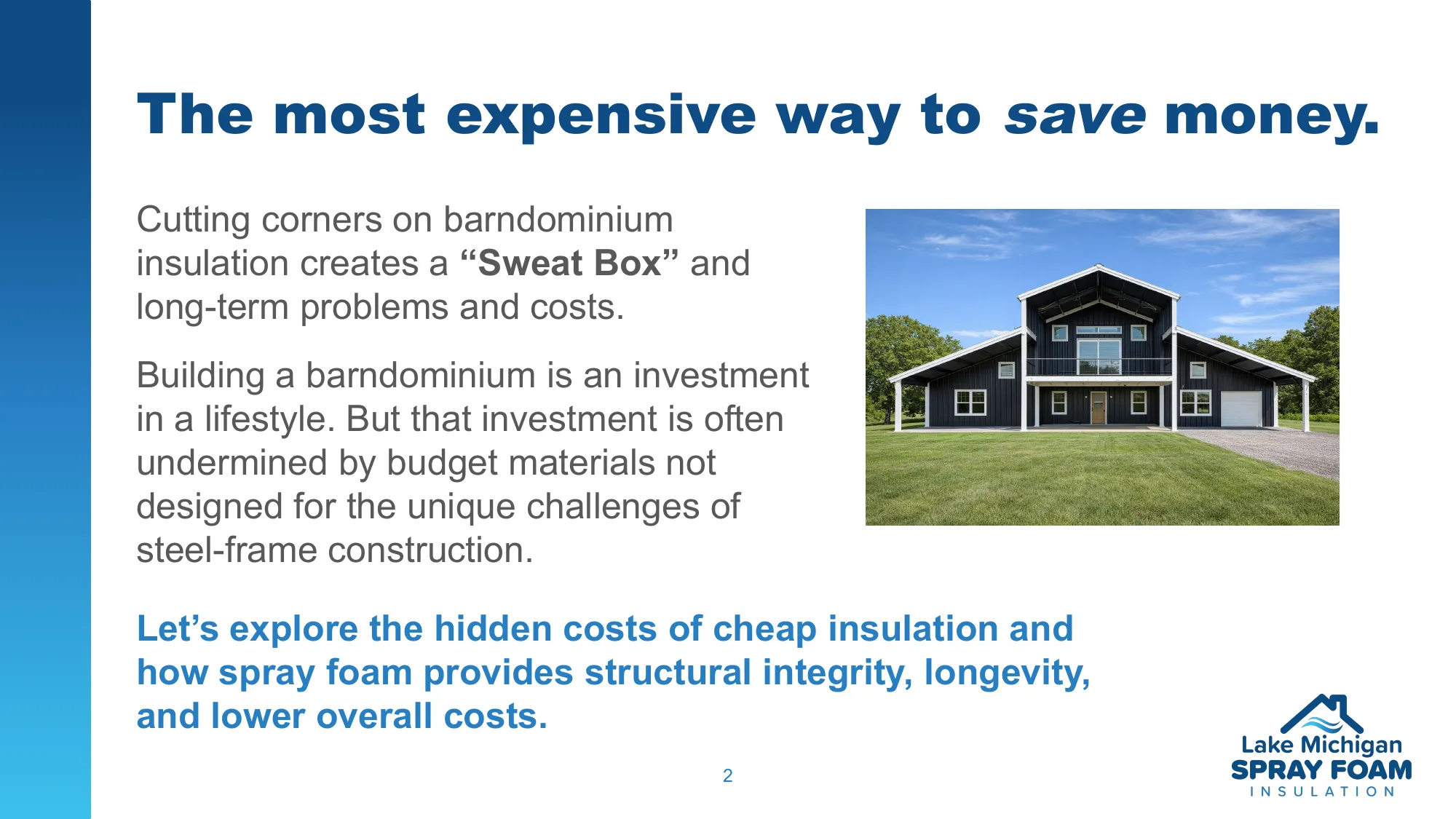
Cutting corners on barndominium insulation creates a 'Sweat Box' and long-term problems and costs. Building a barndominium is an investment in a lifestyle — but that investment is often undermined by budget materials not designed for the unique challenges of steel-frame construction.
Cheap insulation creates hidden costs: condensation, mold, structural corrosion, and ultimately — replacement.
It's Raining Inside My House!
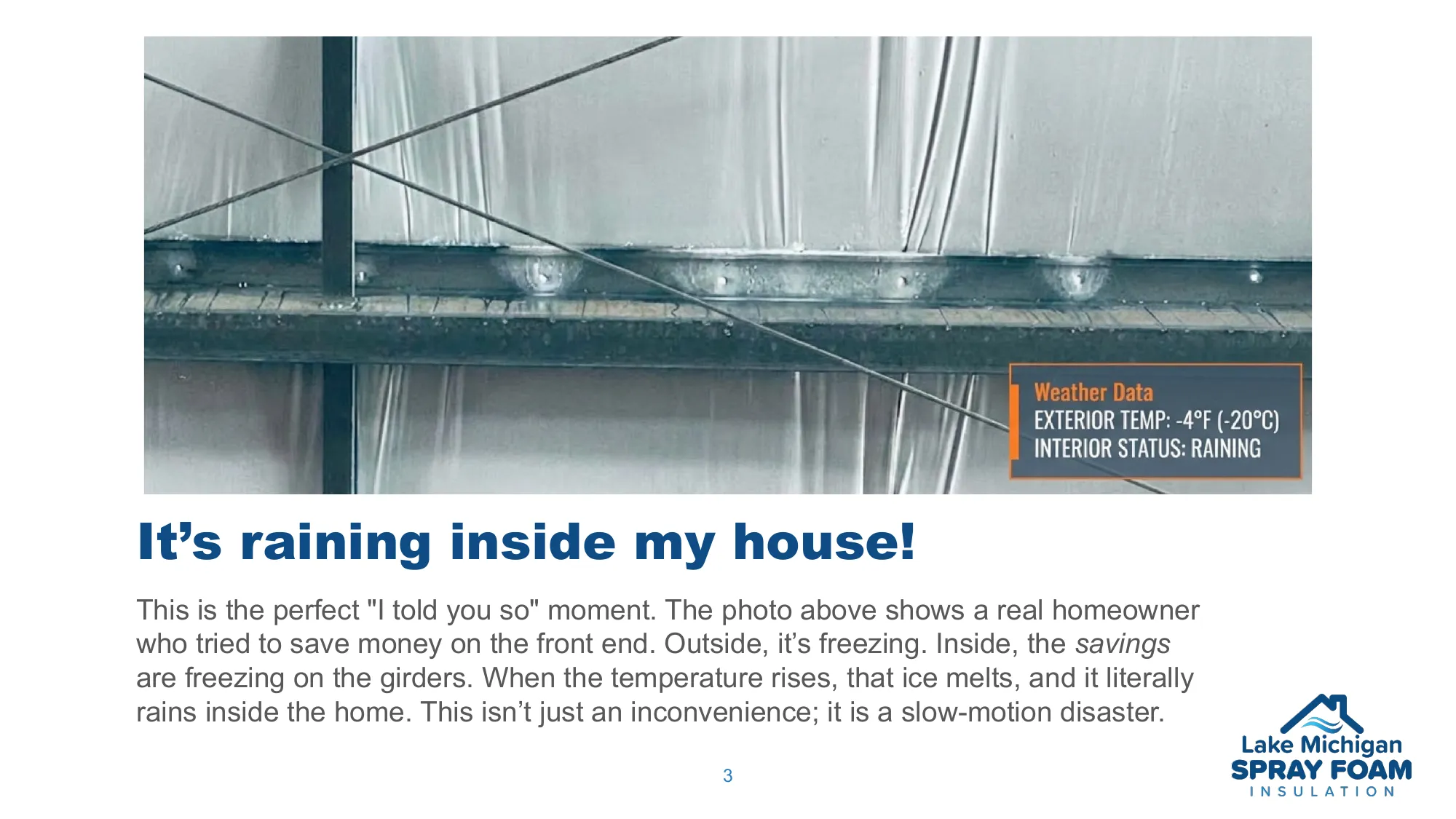
A real homeowner tried to save money on the front end. Outside, it's freezing. Inside, the savings are freezing on the girders. When the temperature rises, that ice melts — and it literally rains inside the home. This isn't just an inconvenience; it is a slow-motion disaster.
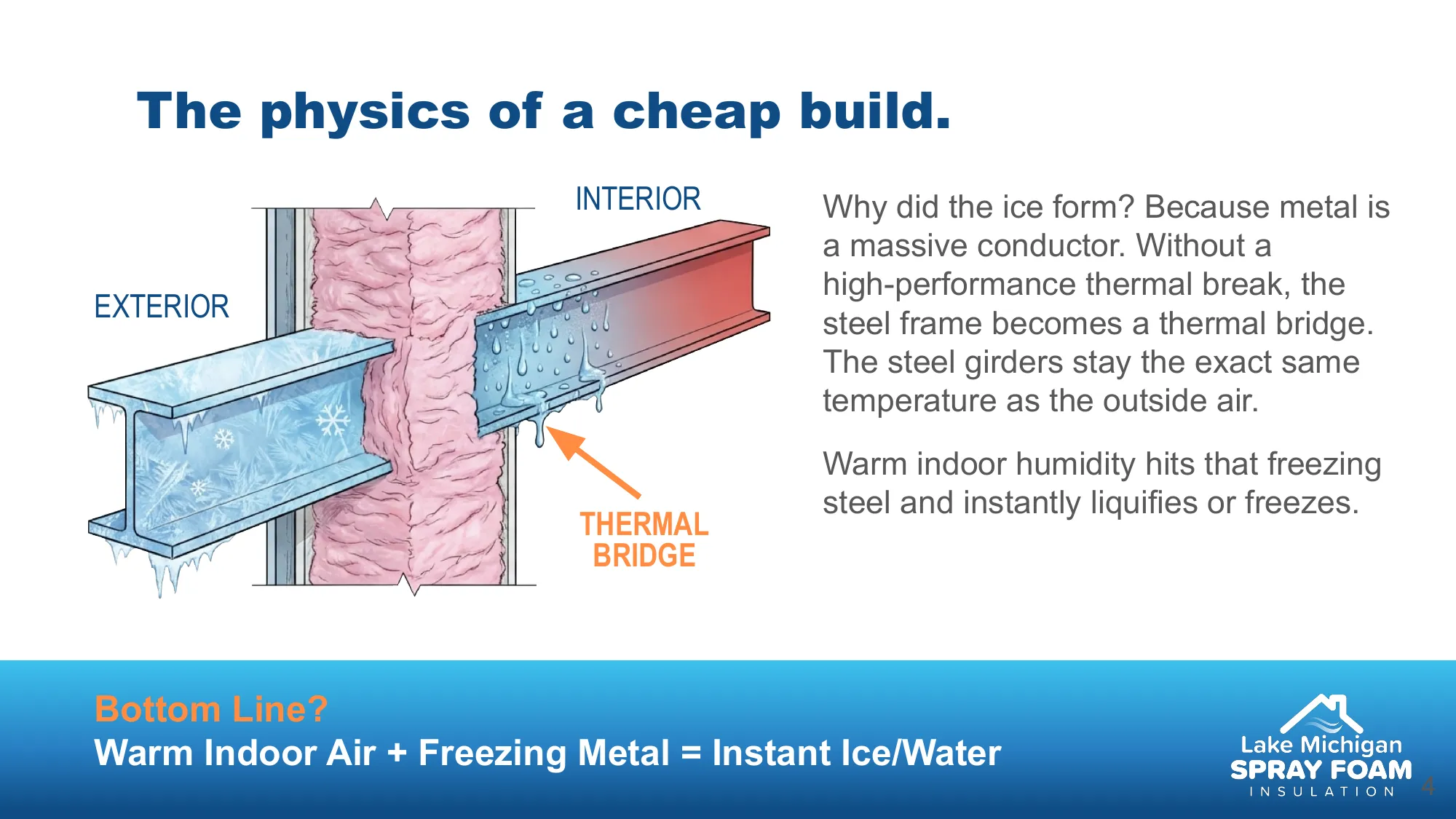
Warm indoor air + Freezing metal = Instant ice and water. Without a thermal break, steel girders stay the same temperature as outside air.
The Physics of a Cheap Build
Metal is a massive conductor. Without a high-performance thermal break, the steel frame becomes a thermal bridge. The steel girders stay the exact same temperature as the outside air. Warm indoor humidity hits that freezing steel and instantly condenses or freezes.
It's Not a Leak — It's Condensation
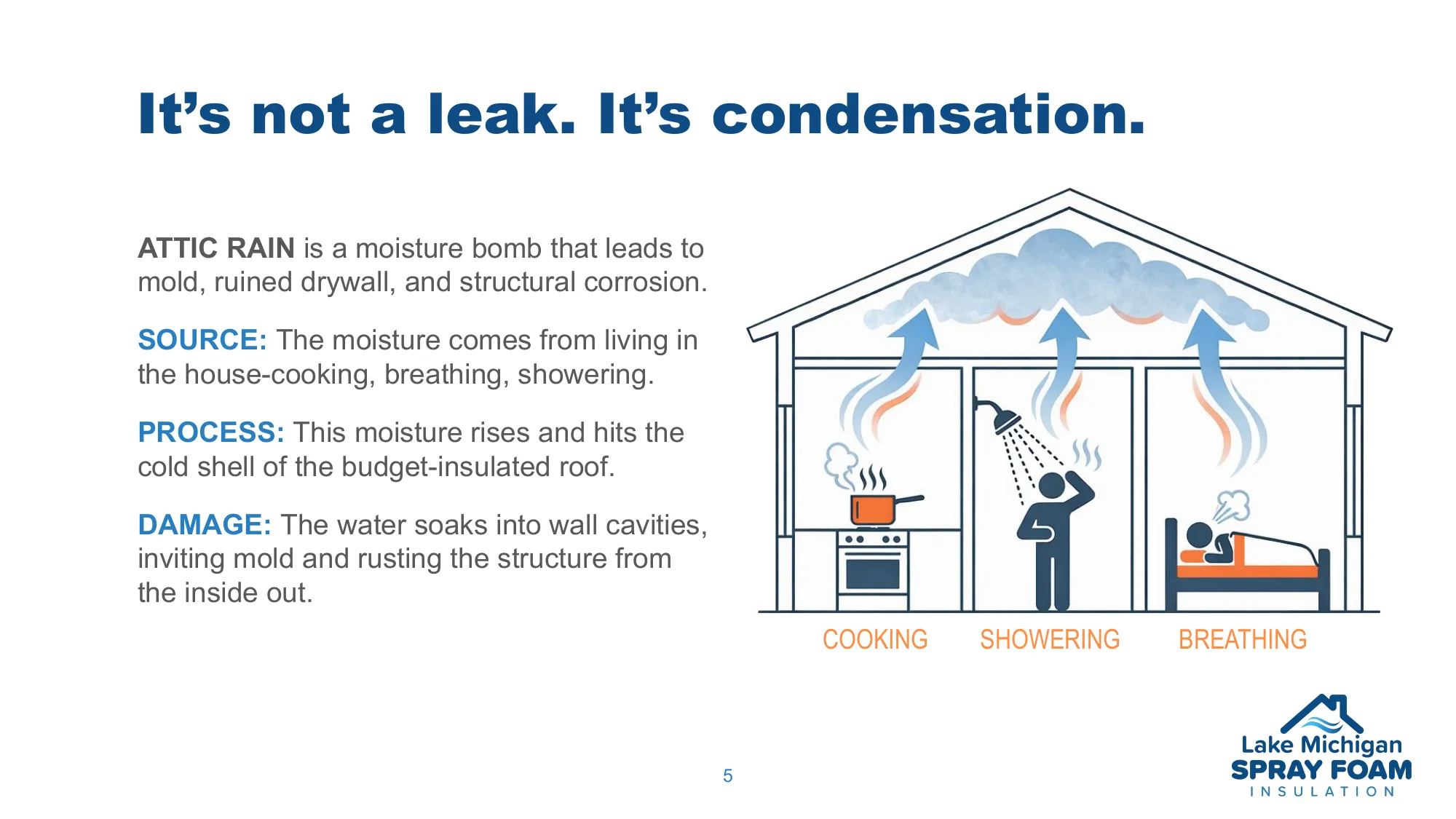
Attic rain is a moisture bomb that leads to mold, ruined drywall, and structural corrosion. Understanding the source, process, and damage is critical.
Attic Rain
Moisture bomb that leads to mold, ruined drywall, and structural corrosion.
Moisture Source
Comes from living in the house — cooking, breathing, showering.
Condensation Process
Moisture rises and hits the cold shell of the budget-insulated roof.
Interior Damage
Water soaks into wall cavities, inviting mold and rusting the structure from the inside out.
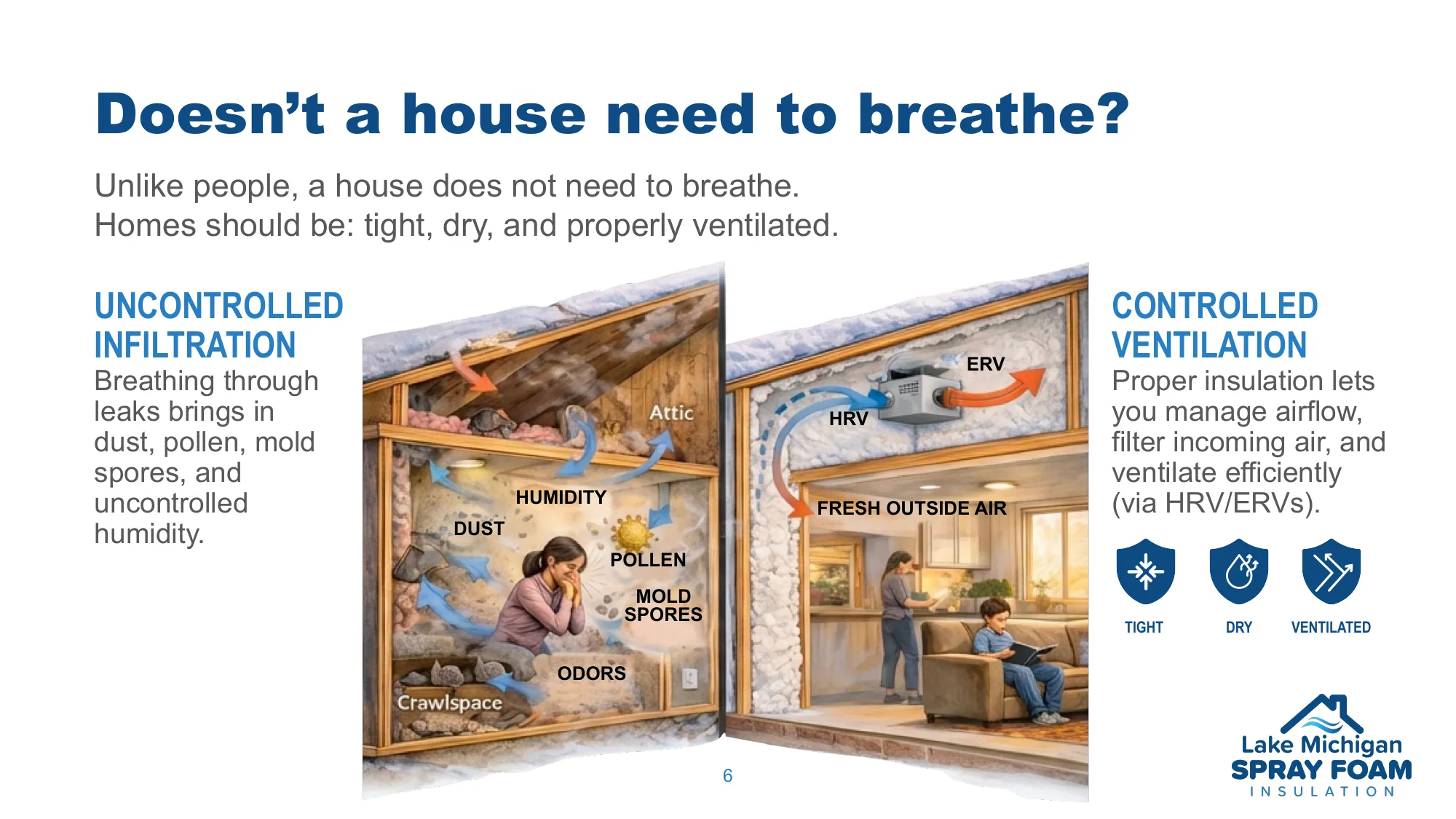
Doesn't a House Need to Breathe?
Unlike people, a house does not need to breathe. Homes should be tight, dry, and properly ventilated. Uncontrolled infiltration brings in dust, pollen, mold spores, and humidity. Controlled ventilation lets you manage airflow, filter incoming air, and ventilate efficiently.
Tight
Proper insulation seals the envelope, stopping uncontrolled air leaks.
Dry
No condensation, no moisture buildup, no mold growth.
Ventilated
Manage airflow with HRV/ERV systems — filter incoming air, control humidity.
You're Paying to Heat the Outdoors
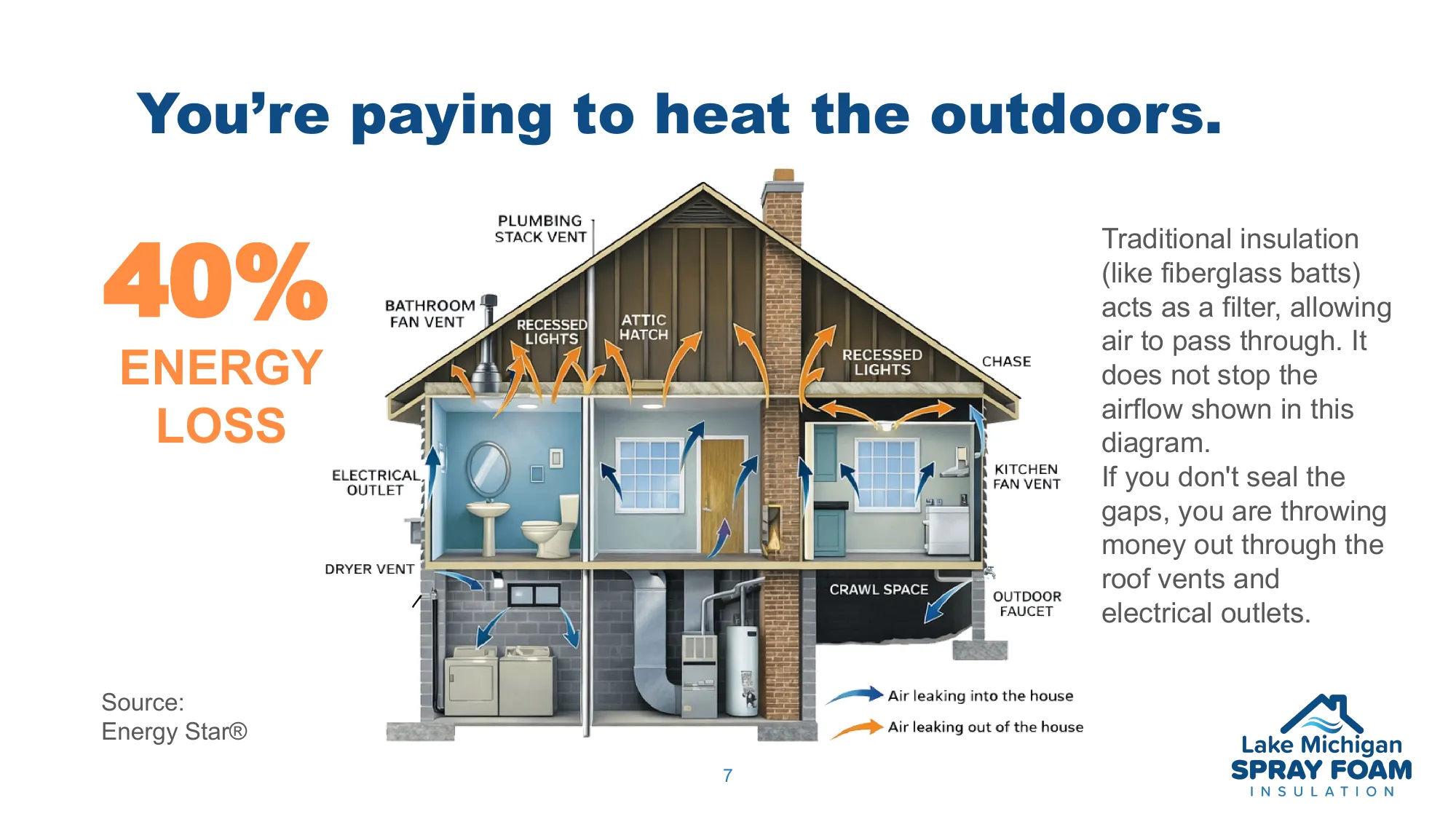
Traditional insulation like fiberglass batts acts as a filter, allowing air to pass through. It does not stop airflow. If you don't seal the gaps, you are throwing money out through the roof vents and electrical outlets.
Energy Loss
According to Energy Star®, up to 40% of a building's energy is lost through unsealed gaps and inadequate insulation. Spray foam seals every gap.
The $8,000 Mistake
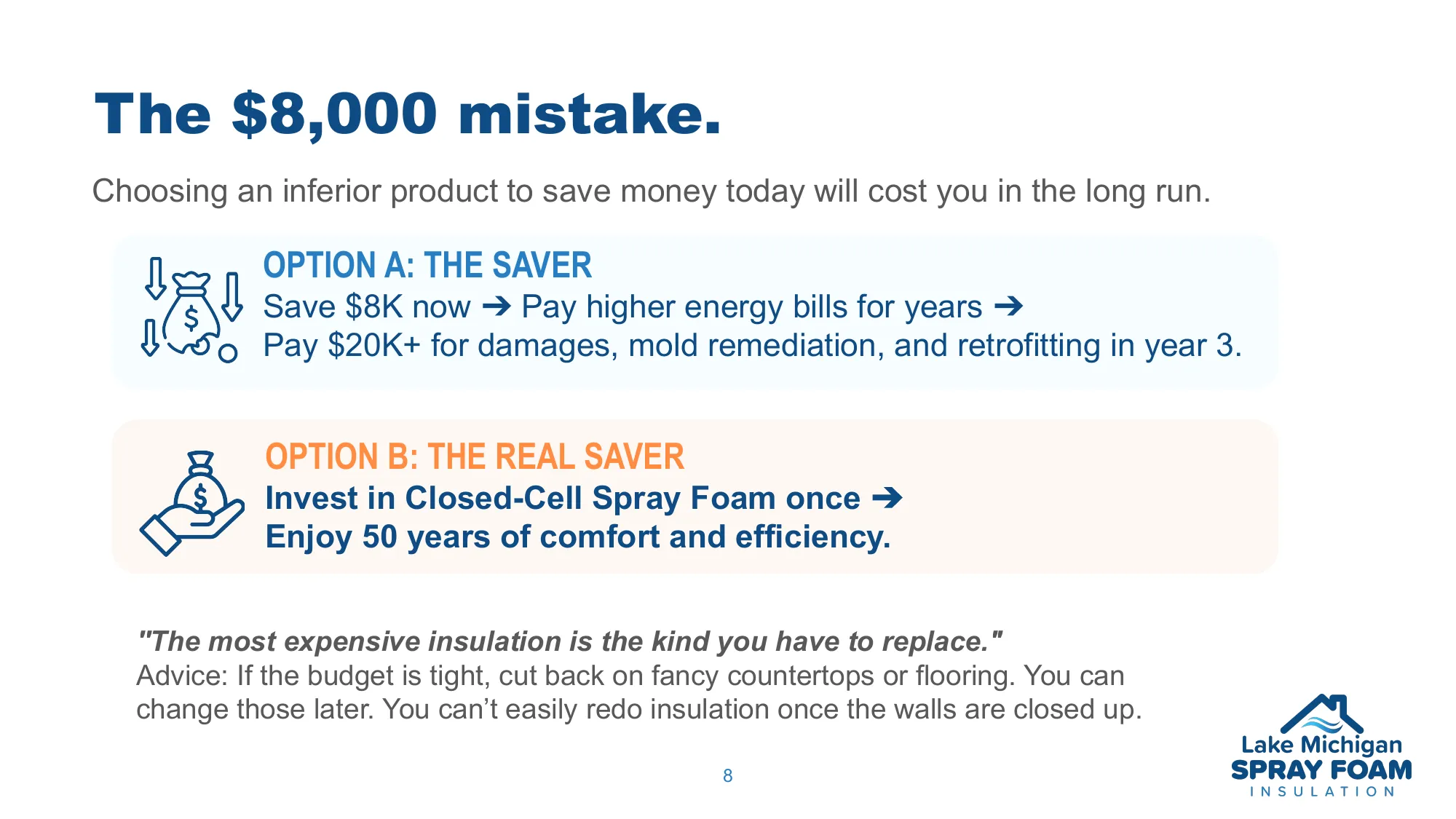
Choosing an inferior product to save money today will cost you in the long run.
Option A: The Saver
Option B: The Real Saver
Your Building's First Line of Defense
Closed-cell spray foam is the only choice for steel structures. Here's why.
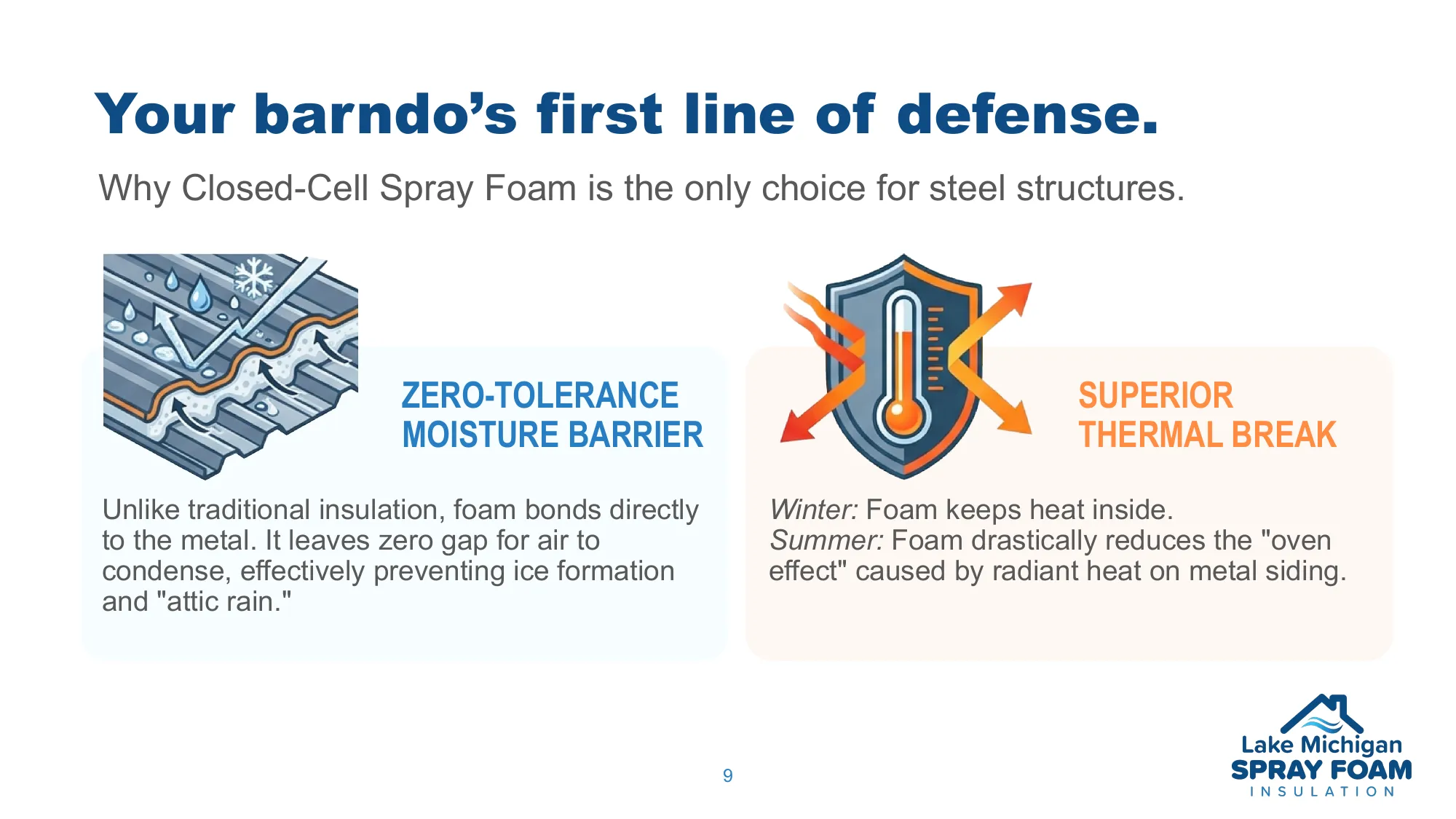
Zero-Tolerance Moisture Barrier
Unlike traditional insulation, foam bonds directly to the metal. It leaves zero gap for air to condense, effectively preventing ice formation and "attic rain".
Superior Thermal Break
Winter: Foam keeps heat inside. Summer: Foam drastically reduces the "oven effect" caused by radiant heat on metal siding.
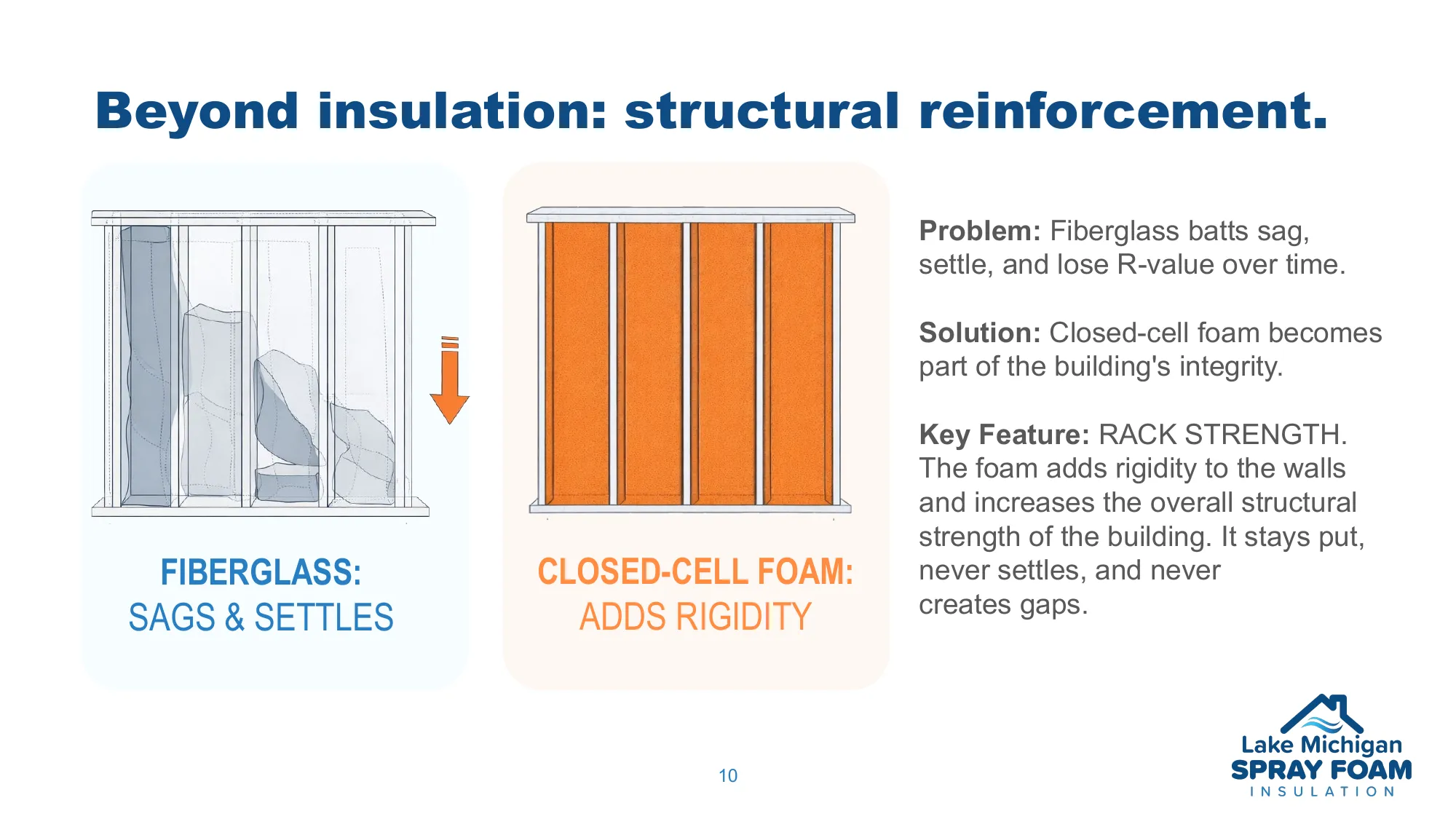
Adds Structural Rigidity
Closed-cell foam becomes part of the building's integrity. It adds rigidity to walls and increases overall structural strength — never settles, never creates gaps.
Fiberglass Sags & Settles
Fiberglass batts sag, settle, and lose R-value over time. They cannot bond to metal, leaving gaps for condensation.
A Comparison in Dollars & 'Sense'
See how spray foam and fiberglass stack up over the long term. Payback is ~3–7 years, with HVAC savings of 20–50%.
| Insulation Type | Upfront Cost | Annual Energy Savings | 30-Year Savings (est.) |
|---|---|---|---|
| Closed-Cell Spray Foam | $4 – $8K+ | ~$225–$500+/yr | ~$7K – $15K+ |
| Fiberglass Batts | $1 – $3K | $80 – $200/yr | ~$2.5K – $6K |
Payback: ~3–7 Years
Because spray foam lowers bills more, many homeowners recover their extra investment in ~3–7 years through energy savings — after that, it's "pure" savings.
HVAC: 20–50% Savings
Spray foam typically cuts heating and cooling energy use by ~20% to 50%, reducing your monthly utility bills significantly.
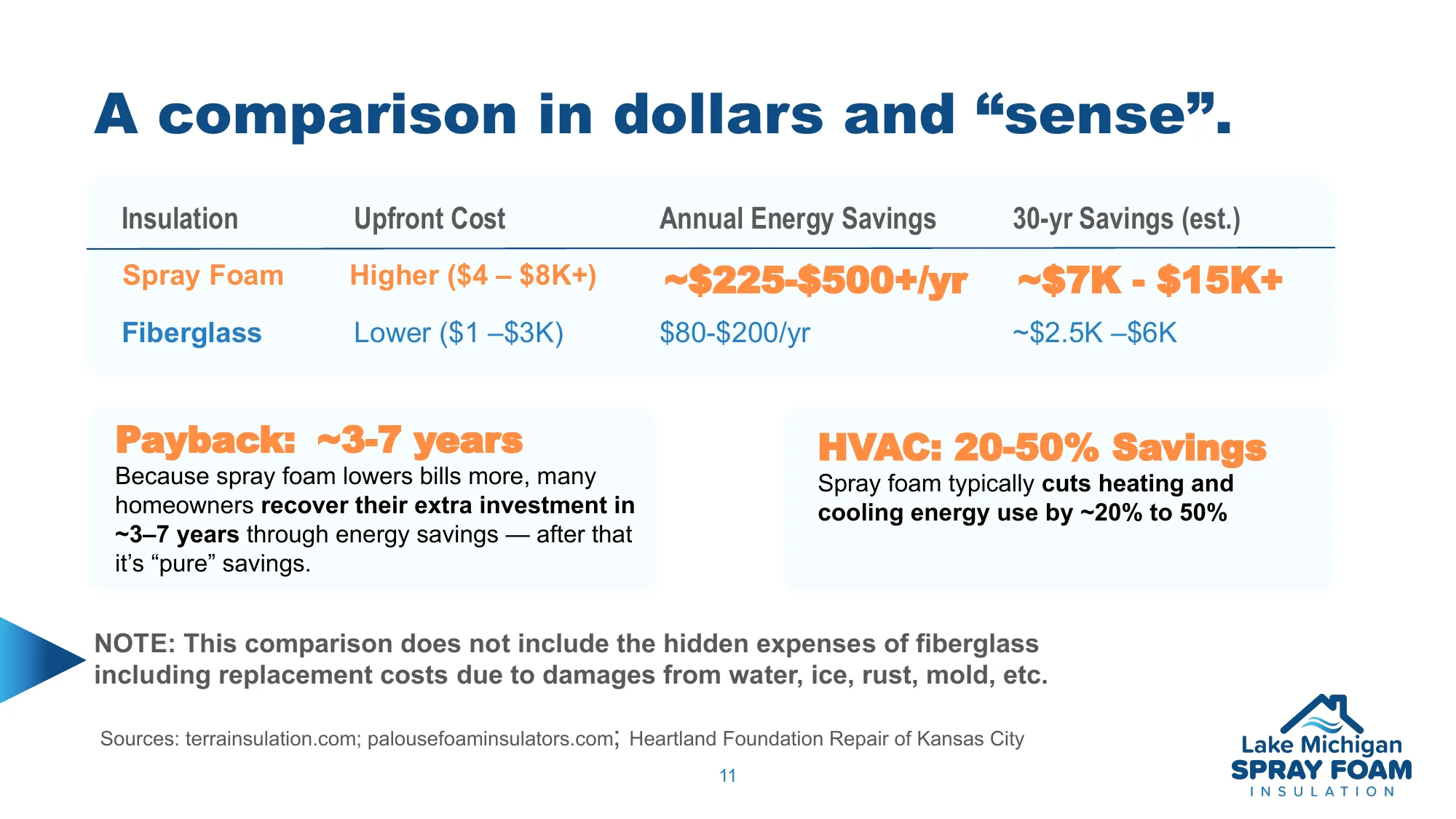
Note: This comparison does not include the hidden expenses of fiberglass including replacement costs due to damages from water, ice, rust, mold, etc.
The Do-It-Once Warranty
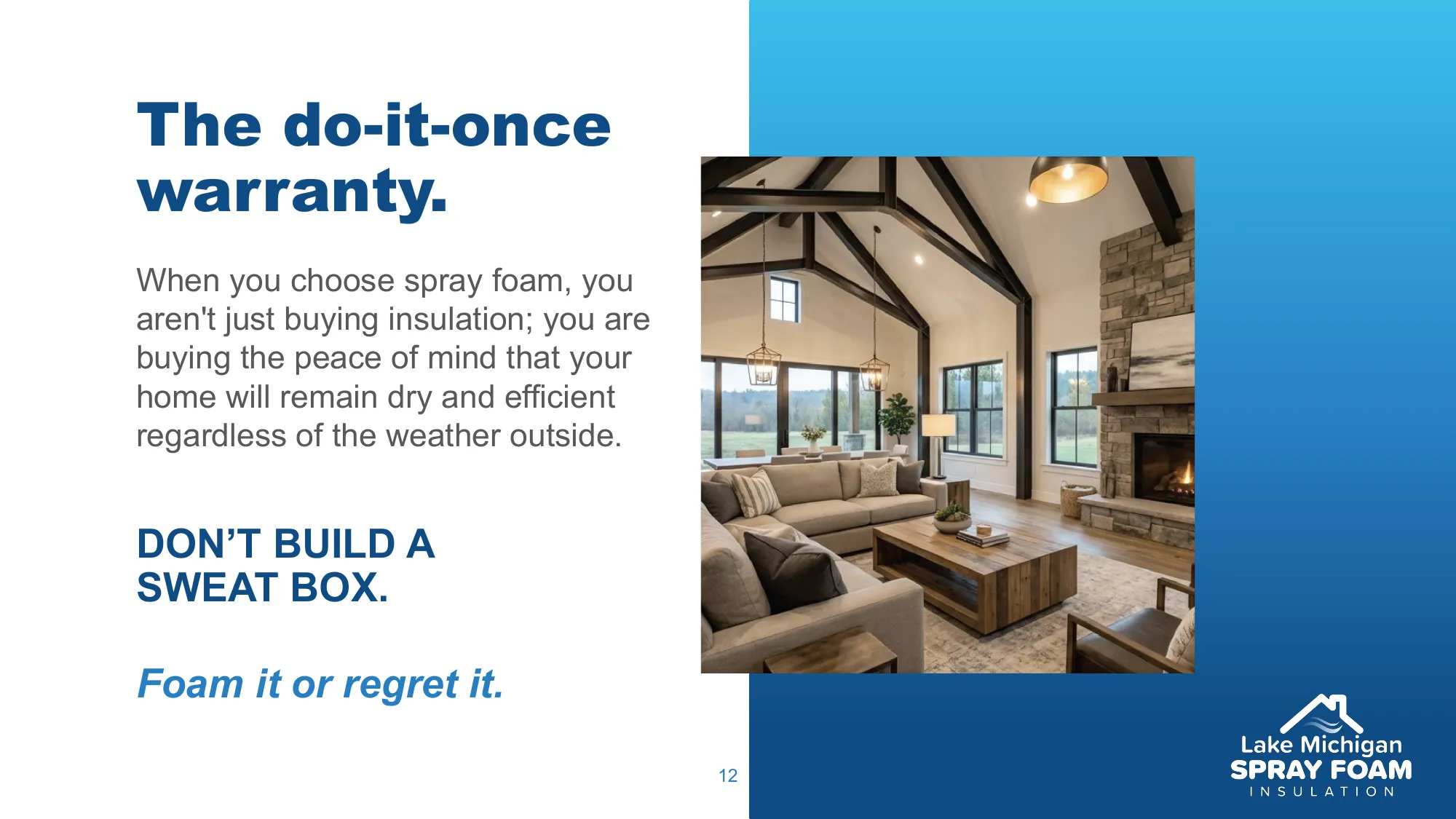
When you choose spray foam, you aren't just buying insulation — you are buying the peace of mind that your home will remain dry and efficient regardless of the weather outside.
Don't Build a Sweat Box.
Foam it or regret it.
About Us
Locally owned and operated, West Michigan Spray Foam, LLC was founded in 2023 by Rick Stevens and Cory Gargus with a commitment to serve the West Michigan community with excellence.
Our Mission
To work faithfully in whatever we do.
Trustworthy Partners
We plan and prepare with transparent honesty.
Leave It Better
We leave every project better than we found it.
Always Make It Right
Quality workmanship, no cutting corners.
Before You Build — Checklist
Don't let your metal building become a sweat box. Review these critical items before finalizing your insulation plan.
Don't Cut Corners on Insulation
"The most expensive insulation is the kind you have to replace." Cutting corners on barndominium insulation creates a "Sweat Box" and long-term problems.
Budget Smart — Insulate First
If the budget is tight, cut back on fancy countertops or flooring. You can change those later. You can't easily redo insulation once the walls are closed up.
Plan for Thermal Breaks
Metal is a massive conductor. Ensure your insulation plan includes a high-performance thermal break at every steel frame contact point.
Include Ventilation Planning
A tight building needs controlled ventilation. Plan for HRV/ERV systems to manage fresh air intake and humidity.
Ready to Seal the Deal?
Contact us for a free consultation. Proudly serving West Michigan and surrounding communities.